Kazakhstan Hits Illegal Gambling Where It Hurts Most: Payments
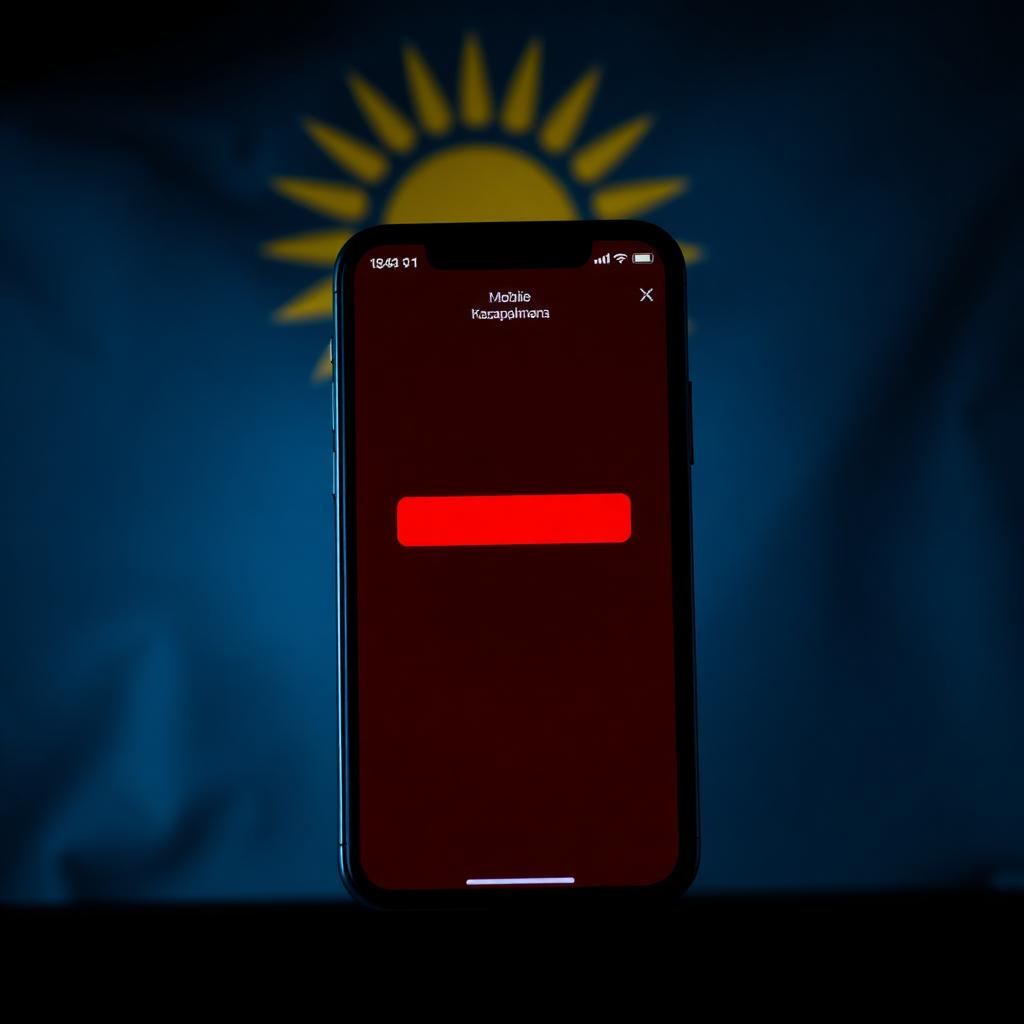
Fresh data from research firm Blask shows a 50 percent collapse in illegal iGaming activity in Kazakhstan after the government blocked mobile payment channels in May 2026. What that means for Germany's own black-market debate.
Regulators around the world have spent years trying to bring illegal online casinos under control. Mostly with domain blocks, fines and orders against hosters. Rarely effective. Kazakhstan picked a different lever in May 2026, and the first numbers, published by iGamingToday.com on June 11, are striking: minus 50 percent iGaming activity in the first week of June, measured by research firm Blask.
What did the government in Astana actually do? In May it combined two packages. First, telecom blocks against domains of more than 600 offshore operators. Second, and this is the decisive part, restrictions on mobile payment services that served as deposit channels into black-market casinos. Apps like Kaspi Pay, used by practically every adult in Kazakhstan, had to block deposits to flagged recipients.
The effect was immediate. Blask, a Tbilisi-based marketing intelligence firm, measures activity through traffic aggregation and affiliate tracking. In the same week it recorded minus 49.5 percent in Uzbekistan and minus 40.5 percent in Tajikistan, where similar telecom measures were running. Three countries, three very similar drops, that is more than coincidence.
Vietnam shows the same trend, just through enforcement instead of payment blocks. Last week police in Hanoi arrested Pham Ngoc Manh, CEO of marketing agency Super Thi Seo Media Services, along with 17 staff. Accusation: promoting 22 Vietnamese-language gambling platforms under the guise of legitimate marketing work. Estimated 2026 revenue: VND 3.7 billion, roughly EUR 130,000.
Europe is shifting too. At the Gaming in Holland conference in early June, the Dutch Kansspelautoriteit signalled it will stop focusing primarily on fines against offshore operators. The new focus is banks, payment providers, hosters, affiliates. The reasoning: enforcing fines abroad is in practice almost impossible, while payment and infrastructure pressure works instantly.
That is relevant for the German market. Since its founding in 2023 the GGL has issued roughly 1,450 block orders against black-market casinos, yet the share of unlicensed operators in online gambling volume has stayed stable at around 25 percent according to University of Hohenheim studies. In other words: blocks alone do not cut it. The federal states have been discussing a payment-services law since February 2026 that would force banks to block payments to flagged black-market accounts, comparable to anti-money-laundering enforcement.
The sticking point: German banks have so far refused, without a clear legal basis, to block payments to MGA or Curacao casinos. They point to free movement of payments in the EEA. The draft law that NRW Interior Minister Herbert Reul (CDU) introduced in April targets exactly that. The model is Norway, which has been blocking payments to flagged recipients since 2019 and has cut the local black-market share from 38 to 22 percent.
What players in Germany should take away: the easy days of black-market deposits are numbered. Anyone playing with a provider without a GGL licence not only risks losing the deposit in case of a dispute, but soon also problems with their own house bank. Anyone wanting to play legally and safely stays with the roughly 30 GGL-licensed online casinos. JackpotPiraten, OnlineCasino DE, Merkur Slots, bwin Casino, Tipico Games or LeoVegas DE all offer full payout guarantees and are wired into LUGAS and OASIS.
Sources & further reading
- Joint Gambling Authority of the German Federal States (GGL): gluecksspiel-behoerde.de
- Whitelist of permitted online operators: GGL-Whitelist
- BZgA problem-gambling helpline: 0800 1 372 700 (free, anonymous, 24/7)
- Editorial methodology: Editorial guidelines Lustich.de
Gambling can be addictive. Please play responsibly. Help and counselling at 0800 1 372 700 (BZgA, free & anonymous).