
Ukraine: Court Rules Against Individual in 1.2M UAH Casino Tax Evasion Case
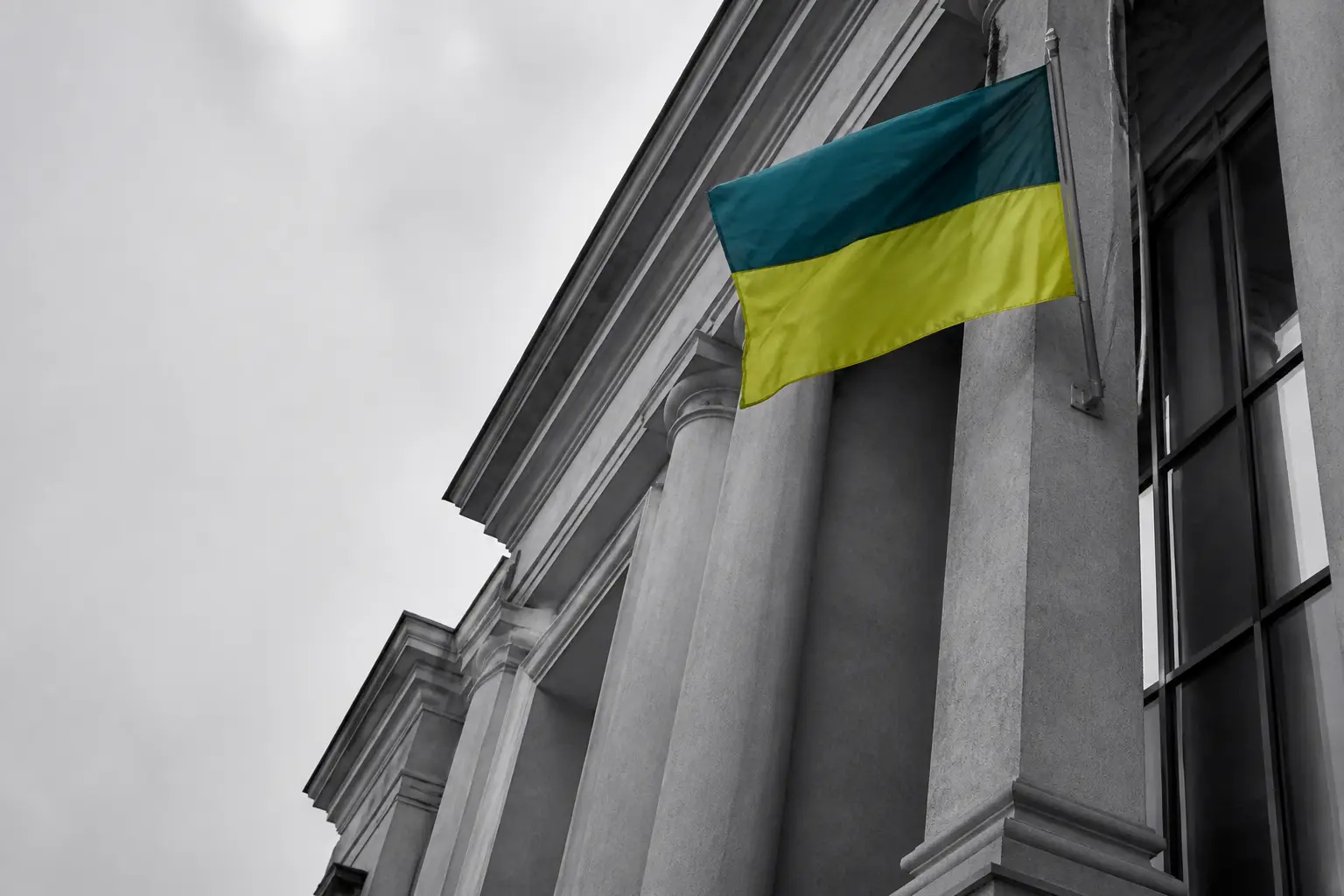
Oleksandr Markin must pay over 1.27 million UAH in taxes and penalties after 5.22 million UAH linked to online casino schemes passed through his accounts.
A significant ruling in Ukraine has highlighted the severe legal risks associated with shadow payment systems in the online gambling industry. The Lviv District Administrative Court recently ordered a citizen to pay massive tax arrears and penalties after his bank accounts were used to move millions of hryvnias. Investigators linked these funds to organized online casino payment schemes, underscoring how national tax authorities are increasingly using financial monitoring to crack down on unregulated gambling activities.
The individual at the center of the case, Oleksandr Markin, was flagged following a review by the National Bank of Ukraine. Monitoring revealed that over 5.22 million UAH had been deposited into his personal accounts from numerous individuals throughout 2023. These funds were never declared, and no annual tax return was filed. Consequently, the State Tax Service launched an unscheduled audit, treating the total amount as taxable personal income. On July 6, 2026, the court upheld the tax assessment in its entirety.
Numbers and facts
The financial penalties imposed on Markin are substantial. According to court records for case No. 380/12355/25, the total amount due is 1,273,048.94 UAH. This figure includes 1,175,148.25 UAH in personal income tax and associated financial penalties. In addition, Markin was ordered to pay 97,900.69 UAH in military duty, which also includes fines for late payment and non-disclosure.
The sheer volume of the transactions is a key element of the case. With 5.22 million UAH passing through the accounts of a single individual, the State Tax Service argued that the influx could not be classified as anything other than taxable income. Judge N.I. Mrychko ruled that money credited to an individual bank account is legally presumed to be taxable unless the recipient can provide evidence to the contrary. No such evidence for the 5.22 million UAH was provided during the administrative proceedings.
Background
Markin's legal team presented a defense based on his personal circumstances, claiming he had been a victim of exploitation. They stated that Markin had lived with a Group II disability since childhood and was officially declared partially incapacitated by another court later on. They argued that third parties took advantage of his condition to open and use his bank accounts as 'drop accounts' for online casino transactions, moving money through his name without his full understanding of the situation.
However, the administrative court found this defense unpersuasive for the tax years in question. The judgment noted that Markin remained fully legally competent throughout 2023, the period when the transfers occurred. The court decision that restricted his legal capacity did not take effect until November 2025. Furthermore, the judge drew a firm line between tax liability and potential criminal fraud:
"Whether third parties exploited the accounts or committed fraud would have to be examined through criminal proceedings rather than in an administrative tax case." - N.I. Mrychko, Judge at the Lviv District Administrative Court
Why it matters for German players
This case serves as a stark warning for players in Germany regarding the importance of using legal channels. Under the State Treaty on Gambling 2021 (GlüStV 2021), Germany has established a strictly regulated market. Using unlicensed offshore casinos often involves dubious payment processors similar to those seen in the Ukrainian case. German authorities and banks are increasingly vigilant about monitoring transactions related to illegal gambling. If a player allows their account to be used for third-party transfers or engages with unregulated platforms, they risk audit, account freezes, and tax complications.
In Germany, systems like LUGAS and the central OASIS file are designed to prevent exactly what happened in this case. They ensure that all gambling activity is tied to the actual, verified player and that deposit limits—currently set at 1,000 EUR per month—are strictly followed. Avoiding unregulated 'black market' sites is the only way to ensure that gambling winnings remain legally separate from potential money laundering investigations.
What it means for GGL-licensed casinos
Casinos operating with a license from the Gemeinsame Glücksspielbehörde der Länder (GGL) provide a safe haven for players. These operators must adhere to strict Know Your Customer (KYC) protocols, ensuring that all funds originate from the player's own verified bank account. This prevents the exploitation of individuals as 'drop account' holders. Furthermore, GGL-licensed sites must enforce a 1 EUR spin limit on virtual slots, which helps curb the massive flow of funds that often attracts the attention of tax investigators. By playing only at casinos on the official GGL whitelist, players protect themselves from being inadvertently caught up in international payment schemes and ensure their gambling remains a leisure activity rather than a legal liability.
Sources & further reading
- Joint Gambling Authority of the German Federal States (GGL): gluecksspiel-behoerde.de
- Whitelist of permitted online operators: GGL-Whitelist
- BZgA problem-gambling helpline: 0800 1 372 700 (free, anonymous, 24/7)
- Editorial methodology: Editorial guidelines Lustich.de
Gambling can be addictive. Please play responsibly. Help and counselling at 0800 1 372 700 (BZgA, free & anonymous).