
India Rejects Blanket Approvals: Every Esports Title Needs Individual Certification
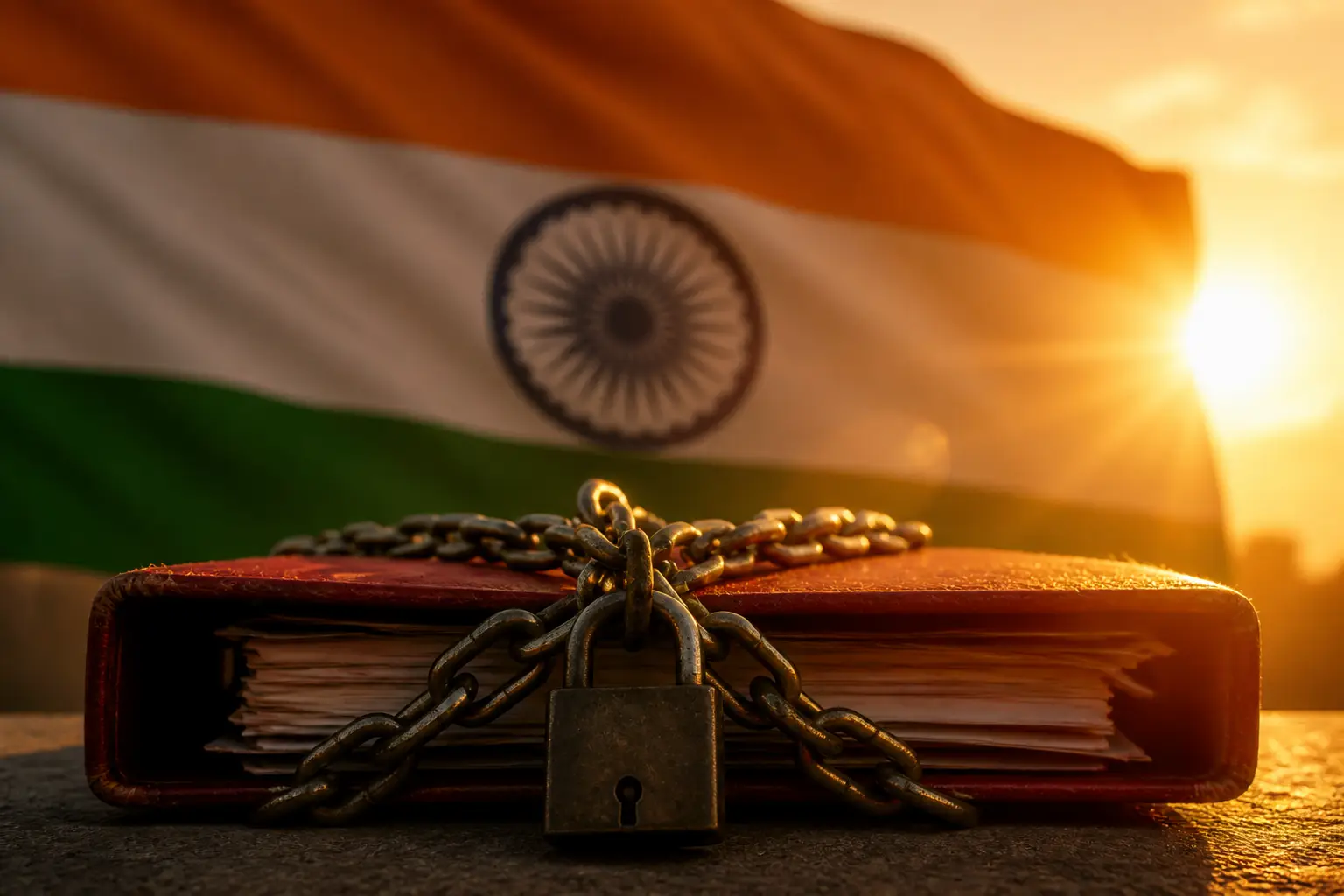
Indian regulators have ruled out portfolio-wide approvals for esports. Each game must now undergo a separate 90-day assessment process under new 2026 gaming rules.
India is taking a firm stand against the blanket approval of digital game portfolios in the esports sector. As the government clarified in a written response to Parliament on July 29, there is no shortcut for providers wishing to bundle multiple titles under a single license. Every game must be assessed individually before it can be legally offered as an esports title in the Indian market. This decision particularly impacts large international publishers who had hoped for more efficient approval procedures.
The new regulation is part of the Promotion and Regulation of Online Gaming Rules 2026 and stipulates that the determination is strictly limited to the specific game and service provider mentioned in the application. It is therefore not possible to transfer a certification to similar games or the same title from a different provider. Companies intending to place multiple products in India must go through a separate application process for every single game, consuming both time and financial resources.
Numbers and facts
The bureaucratic hurdles are set high. Once a complete application is received by the Online Gaming Authority of India, the authority has 90 days to reach a decision. This deadline applies to both the technical evaluation and the final registration as an esports title. The technical examination is highly detailed, covering the game's architecture, gameplay mechanics, revenue model, user interface, and payment arrangements.
A key factor is recognition under the National Sports Governance Act 2025. Without this sporting validation, registration as an esports game is denied. The regulation is particularly sharp regarding money games. Online money games are categorically ineligible for recognition as esports. Should a game be modified after approval, especially concerning payment facilitation, the authority may withdraw its decision and require a fresh determination.
Background
The tightening of the rules originally took effect on May 1, but the latest clarification from July 29 removes any doubt regarding interpretation. The focus is on cleanly separating the market for competitive gaming from unregulated gambling. While online social games do not automatically enter the registration process, the route for esports providers is mandatory. However, the government may notify categories of social games that require review based on user risks or financial transactions.
"The determination is limited to the specific game and service provider mentioned in the application. This determination cannot apply to the same title but from another company." - Written statement by the Indian Government, reply to Parliament
This individual assessment approach means that the costs of market entry rise with every title. Publishers must now budget for regulatory work and compliance for every single game they bring to India. This could lead to smaller providers being pushed out of the market or companies only offering their most successful titles in the region.
Why it matters for German players
For German players operating in one of the most secure markets in the world, the Indian system might sound like extreme administrative overhead. However, upon closer inspection, there are parallels to the German Interstate Treaty on Gambling 2021 (GlüStV 2021). In Germany, a provider cannot simply offer "casino games" but must have every single slot machine checked by the Joint Gambling Authority of the States (GGL). Only games listed on the official whitelist are legal.
In Germany, strict player protection rules apply, such as the cross-provider deposit limit of 1,000 euros per month, monitored via the LUGAS system. Additionally, stakes on virtual slot machines are limited to 1 euro per spin. While India attempts to separate esports from money games, German regulation ensures that gambling remains clearly identifiable and that addiction prevention is the top priority. German players should therefore exclusively use platforms with a GGL license to guarantee protection under German law.
What it means for GGL-licensed casinos
Casinos with a German GGL license already have to go through an approval process for every new game. The Indian development reflects a global trend: regulatory authorities are no longer satisfied with general operator licenses but are looking deep into the mechanics of each individual product. For GGL-licensed companies, this means high effort but also legal certainty against illegal operators from Malta or Curacao, who often operate without any game testing. The transparency India is now demanding is already a standard in Germany through the whitelist and the certification of random number generators (RNG).
Frequently asked questions
Does every esports game in India require individual approval?
Yes, the Indian government has confirmed that there are no blanket approvals for entire portfolios. Every title from a provider must undergo its own process, which may be restarted if the game is updated.
How long does the approval process take in India?
The Online Gaming Authority of India has a maximum of 90 days from the receipt of a complete application to make a decision. This includes both technical assessment and registration.
Can online money games be registered as esports?
No, Indian rules explicitly exclude online money games from being recognized as esports. A game must also be recognized under the National Sports Governance Act 2025 to be eligible for registration.
Are these rules relevant for providers in Germany?
They apply directly only to the Indian market, but they reflect a global trend toward individual product testing. German players already benefit from similar protections under GlüStV 2021, as only GGL-approved games are legal.
Share
About the author

Lisa Lustich
Editor-in-chief & casino tester
Lisa Lustich has been testing German-language online casinos since 1997 and runs the Lustich.de newsroom. More than 400 published reviews, certified player-protection advisor (BZgA training, 2019).
All articles by Lisa Lustich →Sources & further reading
- Joint Gambling Authority of the German Federal States (GGL): gluecksspiel-behoerde.de
- Whitelist of permitted online operators: GGL-Whitelist
- BZgA problem-gambling helpline: 0800 1 372 700 (free, anonymous, 24/7)
- Editorial methodology: Editorial guidelines Lustich.de
 India
IndiaGambling can be addictive. Please play responsibly. Help and counselling at 0800 1 372 700 (BZgA, free & anonymous).
Related topics
Further Reading

Compliance Redefines M&A Dynamics in the Prize Draws Sector
Rising player protection standards are driving consolidation in the prize draw market. ZEAL Network acquired SevenCanyon for £33.8 million as due diligence tightens.

Ontario Overhauls Lottery Licensing: AGCO Introduces New Tickets and Revenue Model
The AGCO is simplifying regulations for Break Open Tickets in Ontario. Starting July 2026, new $0.50 tickets and a mandatory revenue split model will be introduced.

Ocean Casino Resort in Atlantic City Reopens After Fire and Flood Incident
Ocean Casino Resort has resumed gaming operations following a brief shutdown caused by a fire and a burst pipe. A $30,000 tournament was temporarily suspended.