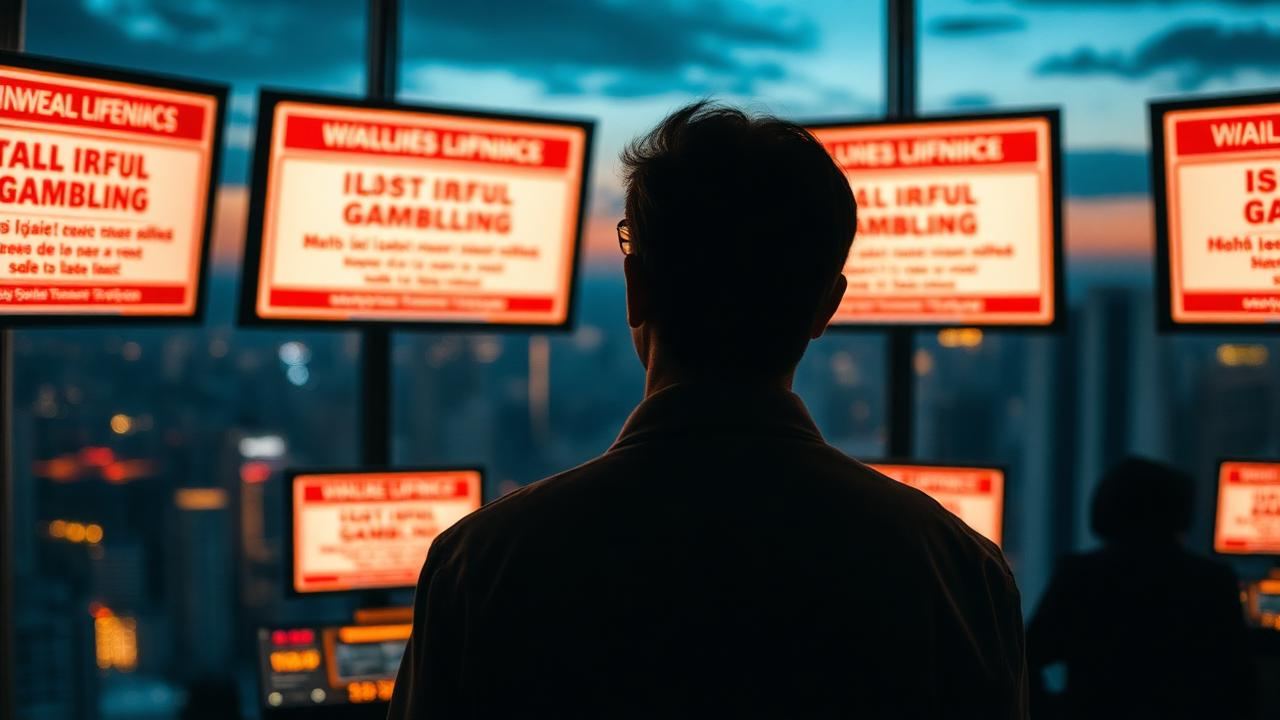
US Gambling Companies Sued Over Addictive App Designs

A surge of lawsuits is targeting US sports betting operators, alleging that companies like FanDuel and DraftKings intentionally use addictive algorithms in their apps, leading to losses of up to $2 million.
The American legal system is currently facing a wave of lawsuits against sports betting companies. The accusation: providers are allegedly designing apps to exploit players with addictive tendencies. This new legal strategy could fundamentally change the industry. Previously, such lawsuits were often dismissed due to a lack of duty of care. The focus is now shifting to the design of the apps themselves.
Whitney Ray Di Bona, an attorney and consumer safety advocate at Drugwatch, sees a parallel to recent lawsuits against social media giants. She hopes this will lead to a future class-action movement. The New Mexico court already found Meta liable for a civil penalty of $375 million, related to misleading statements about the safety of online platforms.
Numbers and facts
Around 80 state-level lawsuits reference the Meta ruling, potentially paving the way for similar outcomes. Plaintiffs view betting apps as products intentionally equipped with addictive features to keep users on the platforms. This can lead to emotional distress, anxiety, depression, and self-harm. Furthermore, those affected often lose significant amounts of money. For example, plaintiffs Christopher Sage and Terry Thompson are seeking $2 million from FanDuel and DraftKings in Pennsylvania. These providers allegedly collaborate with the NFL and Genius Sports to offer a known addictive product, particularly in-game micro-betting.
Another significant case involves Daniel Arroyo versus DraftKings and FanDuel in Massachusetts. He claims to have lost approximately $160,000 with FanDuel and $20,000 with DraftKings, developing a gambling addiction because FanDuel allegedly uses app data, such as time spent wagering, to create personalized algorithms. These algorithms then bombarded him with targeted notifications and advertisements, prompting further wagering.
“They’re basically saying that the apps themselves are products that have intentionally been made with these addictive features that are trapping these users into the platforms, and then causing them emotional distress, anxiety, depression, in some cases self-harm, and obviously, causing these people to lose lots and lots of money.” - Whitney Ray Di Bona, Attorney and Consumer Safety Advocate at Drugwatch
Gambling companies have not yet responded to the allegations. Their lawyers argue that product liability laws do not apply because betting platforms are services. This argument has not been successful in Pennsylvania and Illinois.
Background
The recent wave of lawsuits primarily targets FanDuel and DraftKings, which together control at least 80% of the legal sports betting market in the United States. Since the Professional and Amateur Sports Protection Act was overturned in 2018, gambling companies have spent millions designing apps to retain customers, make play 'frictionless,' and foster loyalty through an increased emphasis on social experiences. However, these developments could now backfire. The legal actions against these companies could have significant implications for app design.
The Meta case differed from most gambling lawsuits as it concerned the exploitation of minors. For sports betting, the minimum age in most US states is 21. Lance Oliver, an attorney at Motley Rice, emphasizes the heightened responsibility for providers of addictive products. Although some cases involve minors, the majority of plaintiffs in the current gambling lawsuits are adults. It remains to be seen whether juries will show the same sympathy for adult plaintiffs as they do for children with undeveloped brains, which is often the case.
Laws in Japan illustrate a different approach. There, increased attention will be paid to the prevention of online gambling addiction. In Germany, meanwhile, 33 sports betting licensees are suing the state of Hesse. They perceive the conditions of the German market as too restrictive, including the 1,000 Euro deposit limit and restrictions on in-play betting, arguing that this drives players to the black market. In Wisconsin, a bill for online sports betting is also being developed, addressing issues such as micro-betting and problem gambling.
Why it matters for German players
Player protection is also a central issue in Germany. The Glücksspielstaatsvertrag 2021 (GlüStV 2021) introduced strict rules, including a monthly deposit limit of 1,000 Euro and a stake limit of 1 Euro per spin for online slots. These limits are monitored via the nationwide self-exclusion system LUGAS. Players who set their own limits or self-exclude are blocked from all licensed providers. These measures aim to protect players from the dangers of gambling addiction. However, the lawsuits in the US show that the technical implementation of player protection measures also plays a crucial role. Such legal disputes could extend to Europe, increasing pressure on software developers to avoid addiction-promoting designs. For German players, this means their data is protected with GGL-licensed providers. The strict requirements of GlüStV 2021 are designed to protect players from excessive losses and the risk of gambling addiction. For instance, the “personalized ‘bonus’ incentives and ‘push’ notifications” criticized by Daniel Arroyo in the US are regulated or prohibited by many GGL-licensed providers in Germany to limit manipulative customer engagement.
What it means for GGL-licensed casinos
The Gemeinsame Glücksspielbehörde der Länder (GGL) licenses and supervises online gambling providers in Germany, ensuring compliance with the GlüStV 2021. The current developments in the US could also prompt the GGL to scrutinize the design of gambling apps even more closely. Already, requirements for gambling addiction prevention are a central component of licensing. Manipulative algorithms or designs aimed at exploiting addiction mechanisms are strictly prohibited. The GGL whitelist lists all legal providers. Players should only play with these providers to ensure maximum protection. If the plaintiffs' arguments in the US prevail, this could eventually influence the requirements for software developers and platform operators worldwide. Even if German regulations are already very strict, the focus on app design could lead to further adjustments and even more detailed guidelines.
“I’m sure that we’re going to find probably lots of really interesting information about what’s gone on behind the scenes with the people who have developed these apps and the decisions that have been made and why they made those decisions.” - Whitney Ray Di Bona, Attorney and Consumer Safety Advocate at Drugwatch
Sources & further reading
- Joint Gambling Authority of the German Federal States (GGL): gluecksspiel-behoerde.de
- Whitelist of permitted online operators: GGL-Whitelist
- BZgA problem-gambling helpline: 0800 1 372 700 (free, anonymous, 24/7)
- Editorial methodology: Editorial guidelines Lustich.de
Gambling can be addictive. Please play responsibly. Help and counselling at 0800 1 372 700 (BZgA, free & anonymous).