Border Breakthrough: Gibraltar and Spain Open Gates for Gaming Industry
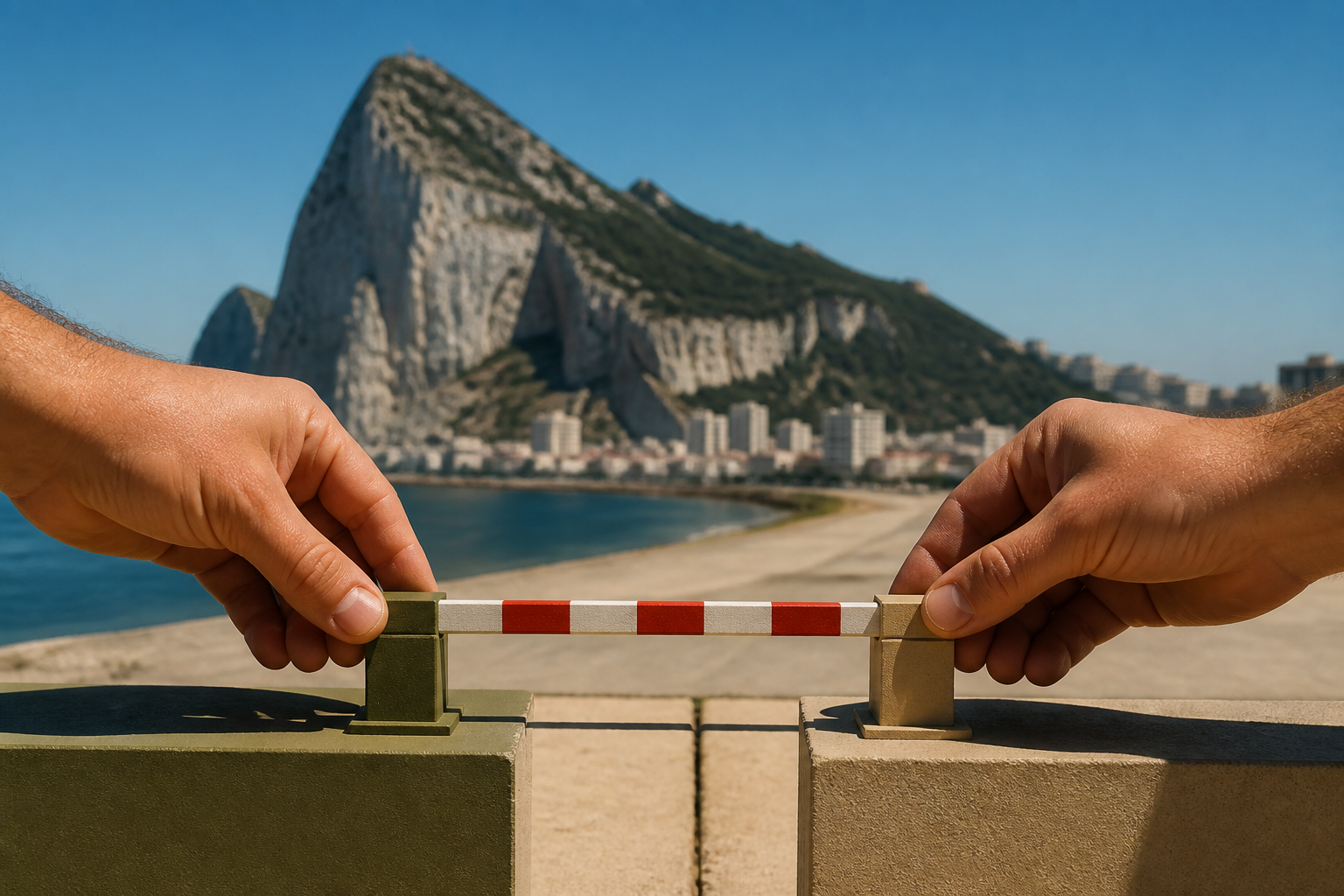
Gibraltar and the EU have signed a treaty, effective July 15, removing border controls with Spain. The online gaming sector accounts for 30% of Gibraltar's GDP.
Gibraltar and the European Union have signed a groundbreaking treaty. This agreement, set to come into force on July 15, will eliminate border controls between Gibraltar and Spain. This is a significant step for the territory's economy. The gambling sector, in particular, stands to benefit.
The territory will effectively become part of the Schengen free-movement area. This will greatly simplify travel for residents. Gibraltar anticipates greater economic stability following the uncertainties of Brexit.
Numbers and facts
Under the new agreement, residents of Gibraltar will no longer require passport stamps to enter Spain. Spanish citizens will be able to cross the Gibraltar border with ID cards. British and Gibraltar officials will continue to conduct UK border checks, while Spanish authorities will perform Schengen checks. The online gaming sector contributes a remarkable 30 percent to Gibraltar's Gross Domestic Product (GDP). This sector licenses 54 gambling operators. Fabian Picardo, Gibraltar's Chief Minister, sees significant opportunities:
“This will be a work in progress for us as we start this operation. Business will now be able to see a footfall increase, which is not going to be restrained by a potential queue.” – Fabian Picardo, Chief Minister of Gibraltar
The treaty aims to streamline border operations. This is crucial as Gibraltar's economy heavily relies on a cross-border workforce. Sectors such as tourism, hospitality, and online gaming are particularly affected. Additional safeguards are planned, including a modern financial system for employment training. Improved coordination on social security issues and protection for cross-border workers are also included. Despite the close cooperation, the government emphasizes that Gibraltar's sovereignty will not be transferred to Spain.
Background
Brexit raised many questions about Gibraltar's future. The gambling industry, in particular, was concerned. Many employees of gambling companies live in southern Spain and commute daily to Gibraltar. This is due to the high rental prices in Gibraltar. A budget of £1,000 per month in Gibraltar often only gets a studio apartment. In Spain, the same amount can easily secure a three-bedroom apartment or a small beachfront villa. As early as 2016, there were rumors of a complete border closure. At that time, companies planned to have employees work from home. Andrew Lyman, Executive Director of the Gibraltar Government’s Gambling Division, commented that the uncertainty was high. However, many operators had already planned for a worst-case scenario. Companies like Bet365 relocated parts of their teams to Malta. Others, such as William Hill, Ladbrokes Coral, and 888, remained in Gibraltar. John O’Reilly, CEO of Rank Group, expressed hope that “logic and common sense prevails.” Gambling companies have invested significantly in Gibraltar’s infrastructure. Gibraltar evolved from a European hub to a hub for UK and non-EU markets. Teams focused on innovation rather than operational services. This adaptability helped mitigate the impact of Brexit on the industry. The continuous and strong support from the government and regulator was crucial.
Why it matters for German players
For German players interested in online gambling, the developments in Gibraltar do not directly entail any changes. The German market is regulated by the Glücksspielstaatsvertrag 2021 (German State Treaty on Gambling 2021). This means that German players are only permitted to engage with online casinos that hold a license from the Joint Gaming Authority of the Federal States (GGL). Casinos with a Gibraltar license do not fall into this category. They are not allowed to offer their services in Germany. The GGL enforces the strict requirements of the State Treaty. Players on the GGL whitelist benefit from important protective measures. These include a bet limit of 1 Euro per spin on slot machines. Furthermore, there is a monthly deposit limit of 1,000 Euros, which is monitored via the central LUGAS system. These measures are designed to prevent gambling addiction and promote responsible gaming. Therefore, an opening of the border in Gibraltar has no impact on the legal situation of German online casinos. Players should always adhere to GGL-licensed providers to gamble safely and legally. MGA or Curacao licenses do not offer this type of protection permitted in Germany.
What it means for GGL-licensed casinos
The new agreement between Gibraltar and the EU does not directly affect German GGL-licensed casinos. These casinos are subject to strict national regulations in Germany, not the regulations of Gibraltar. The GGL’s focus is on player protection and compliance with the Glücksspielstaatsvertrag 2021. The licensing of online gambling providers by the GGL is tied to specific technical and organizational requirements. These include, for example, connection to the cross-system self-exclusion database OASIS and the limit system LUGAS. An easing of border processing in Gibraltar has neither positive nor negative effects on German GGL-licensed casinos. For them, national laws and regulations remain decisive. They must continue to fully comply with the GGL’s requirements. This development is a regional matter in Southern Europe. It has no impact on the strategic orientation of German casinos or the competitive situation in the regulated German online gambling market.
Sources & further reading
- Joint Gambling Authority of the German Federal States (GGL): gluecksspiel-behoerde.de
- Whitelist of permitted online operators: GGL-Whitelist
- BZgA problem-gambling helpline: 0800 1 372 700 (free, anonymous, 24/7)
- Editorial methodology: Editorial guidelines Lustich.de
Gambling can be addictive. Please play responsibly. Help and counselling at 0800 1 372 700 (BZgA, free & anonymous).