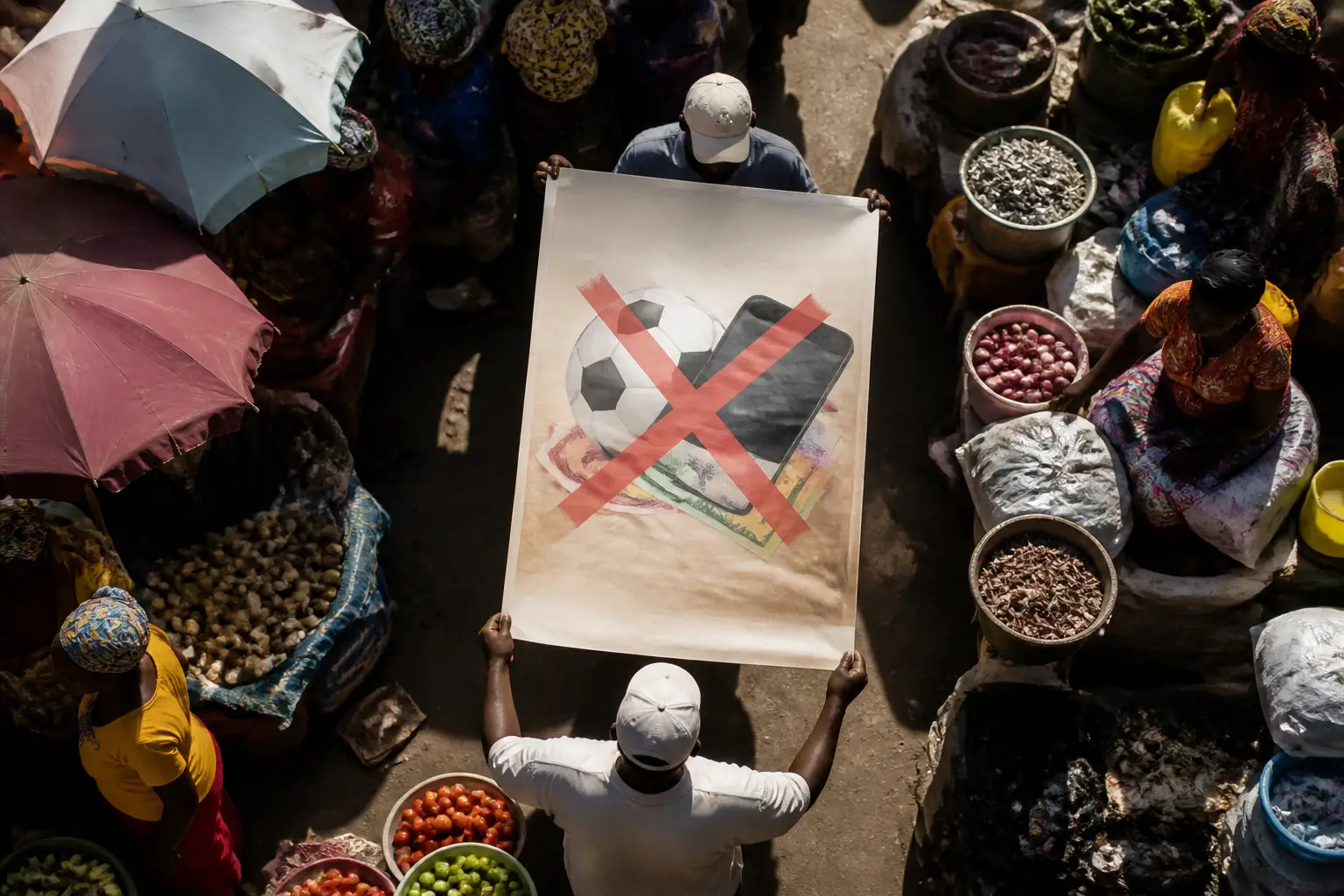
South Africa Cracks Down on Online Gambling: Fight Against Offshore Providers
 AI-GENERATED
South Africa's gambling authority is intensifying its fight against illegal online casinos. International partners will help stop the influx of offshore offerings. A groundbreaking development for other markets too.
What happened
The South African National Gambling Board (NGB) has unveiled a new strategy to more strictly control the online gambling market. Following intensive discussions with international allies, the authority plans to take tough action against foreign, unlicensed gambling providers. These providers have attracted increasing numbers of South African players in recent years. The NGB aims to curb this uncontrolled growth and enforce domestic regulation. This is a clear step to protect the domestic market and safeguard players from the risks of unregulated offerings. It demonstrates the seriousness with which this issue is being addressed globally.
Background
South Africa has a long history with gambling, but the online sector has been less strictly regulated than in many European countries. This created a loophole that offshore providers rigorously exploited. These casinos often operate under licenses from jurisdictions like Curaçao or Malta, which have no validity in South Africa. They pay no taxes in the country, often offer inadequate player protection, and operate outside national legislation. The NGB recognized the increasing popularity of these sites as a threat to the national economy and player safety. Collaboration with foreign partners is a crucial factor in being able to act across borders. It is a complex problem that requires a coordinated response. The new initiative is a clear sign that South Africa will no longer stand by idly. The financial damage from untaxed revenues is likely to be substantial.
Why it matters for German players
For German players, South Africa might seem far away, but the developments there are certainly relevant. Many countries struggle with similar problems: unlicensed offshore casinos attract players with appealing bonuses and seemingly easier access. German players who consciously choose licensed providers recognize the value of regulation. However, there are still many who frequent sites that do not possess a GGL license. This South African initiative underlines the global problem of unregulated gambling markets. It also shows that regulatory authorities worldwide are waking up and taking action. Anyone playing in Germany at providers like Jackpotpiraten, Tipwin, Crazy Buzzer, Merkur Slots, or Löwen Play is on the safe side. These casinos are subject to strict German laws and offer comprehensive player protection. Conversely, anyone who falls for the tempting promises of foreign, and in Germany illegal, providers exposes themselves to significant risks. This can range from fraud to problems with prize payouts.
What it means for GGL-licensed casinos
South Africa's offensive against offshore providers indirectly strengthens the position of regulated markets and their providers. If countries like South Africa successfully combat unlicensed competition, it sends a strong signal. It shows that regulation is taken seriously and that the fight against the black market is gaining momentum internationally. For GGL-licensed casinos like Jackpotpiraten, Tipwin, Crazy Buzzer, Merkur Slots, and Löwen Play, this means tailwind. Their business models are based on compliance and player protection. Any measure that cleans up the general market benefits them. It increases player confidence in regulated offerings and highlights the disadvantages of unregulated alternatives. In the long term, this could lead to a shift of player funds towards legal providers. This is good for the state, which generates tax revenue, and good for players, who can gamble in a secure environment. Industry associations in Germany also closely monitor such developments. They can serve as a blueprint for their own measures or initiate similar collaborations.
The South African efforts are another piece of the puzzle in the global picture of gambling regulation. They show that the fight against illegal providers remains an ongoing endeavor that requires commitment and international cooperation. For us as industry observers, this is an important development that we will continue to keep an eye on.
Frequently asked questions
What is the South African National Gambling Board (NGB) doing about online gambling?
The NGB has presented a new strategy for stricter control of the online gambling market. It plans to take strong action against foreign, unlicensed gambling providers that attract many South African players.
Why are offshore providers a problem in South Africa?
These providers exploit a loophole in the less strictly regulated online sector and often operate under licenses that are not valid in South Africa. They do not pay taxes in the country, often offer inadequate player protection, and operate outside national legislation.
What is the significance of the South African developments for German players?
The South African initiative underscores the global problem of unregulated gambling markets, which Germany also faces. It shows that regulatory authorities worldwide are taking action to increase player safety and control the market.
How do GGL-licensed casinos benefit from the offensive against offshore providers?
The measures indirectly strengthen the position of regulated markets like Germany's. They increase player trust in legal offerings and highlight the disadvantages of unregulated alternatives, which can lead to a shift towards licensed providers in the long term.
What risks do German players face when playing on illegal foreign gambling sites?
Players who frequent sites without a GGL license expose themselves to significant risks, ranging from fraud to problems with winning payouts, as these providers operate outside strict German laws.
Share
About the author

Lisa Lustich
Editor-in-chief & casino tester
Lisa Lustich has been testing German-language online casinos since 1997 and runs the Lustich.de newsroom. More than 400 published reviews, certified player-protection advisor (BZgA training, 2019).
All articles by Lisa Lustich →Sources & further reading
Whitelist of permitted online operators
Editorial guidelines Lustich.de
BZgA problem-gambling helpline: 0800 1 372 700
 South Africa
Gambling can be addictive. Please play responsibly. Help and counselling at 0800 1 372 700 (BZgA, free & anonymous).
Read this article in 57 languages
- German
- English
- Portuguese
- French
- Italian
- Spanish
- Japanese
- Polish
- Arabic
- Dutch
- Russian
- Turkish
- Swedish
- Danish
- Norwegian
- Finnish
- Korean
- Hindi
- Indonesian
- Thai
- Vietnamese
- Chinese
- Czech
- Hungarian
- Romanian
- Greek
- Ukrainian
- Croatian
- Bulgarian
- Filipino
- Slovak
- Serbian
- Hebrew
- Persian
- Malay
- Bangla
- Tamil
- Telugu
- Urdu
- Georgian
- Khmer
- Albanian
- Kazakh
- Afrikaans
- Lithuanian
- Latvian
- Estonian
- Slovenian
- Uzbek
- Swahili
- Azerbaijani
- Amharic
- Tajik
- Kyrgyz
- Sinhala
- Hausa
- Nepali
Related topics
Further Reading
 AI-GENERATED
Australia to Launch National Opt-Out Register for Gambling Advertisements
The Australian government is pushing for a central opt-out register to shield citizens from gambling ads. Violations could result in fines of up to 7,500 penalty units.
 AI-GENERATED
Illegal Gambling on Instagram: Colombian Influencer Fined $38,000
Coljuegos, the Colombian gambling regulator, has fined influencer Yeferson Cossio $38,000 for promoting unlicensed gambling activities to his millions of followers.
 AI-GENERATED
Cambodia Revokes 20 Casino Licenses in Massive Online Scam Crackdown
Cambodian authorities have revoked 20 casino licenses and shut down 605 scam facilities. Over 4,147 suspects are facing prosecution in a nationwide cleanup.