
Greenbrier Resort: Casino Remains Operational Despite $500 Million Debt Crisis
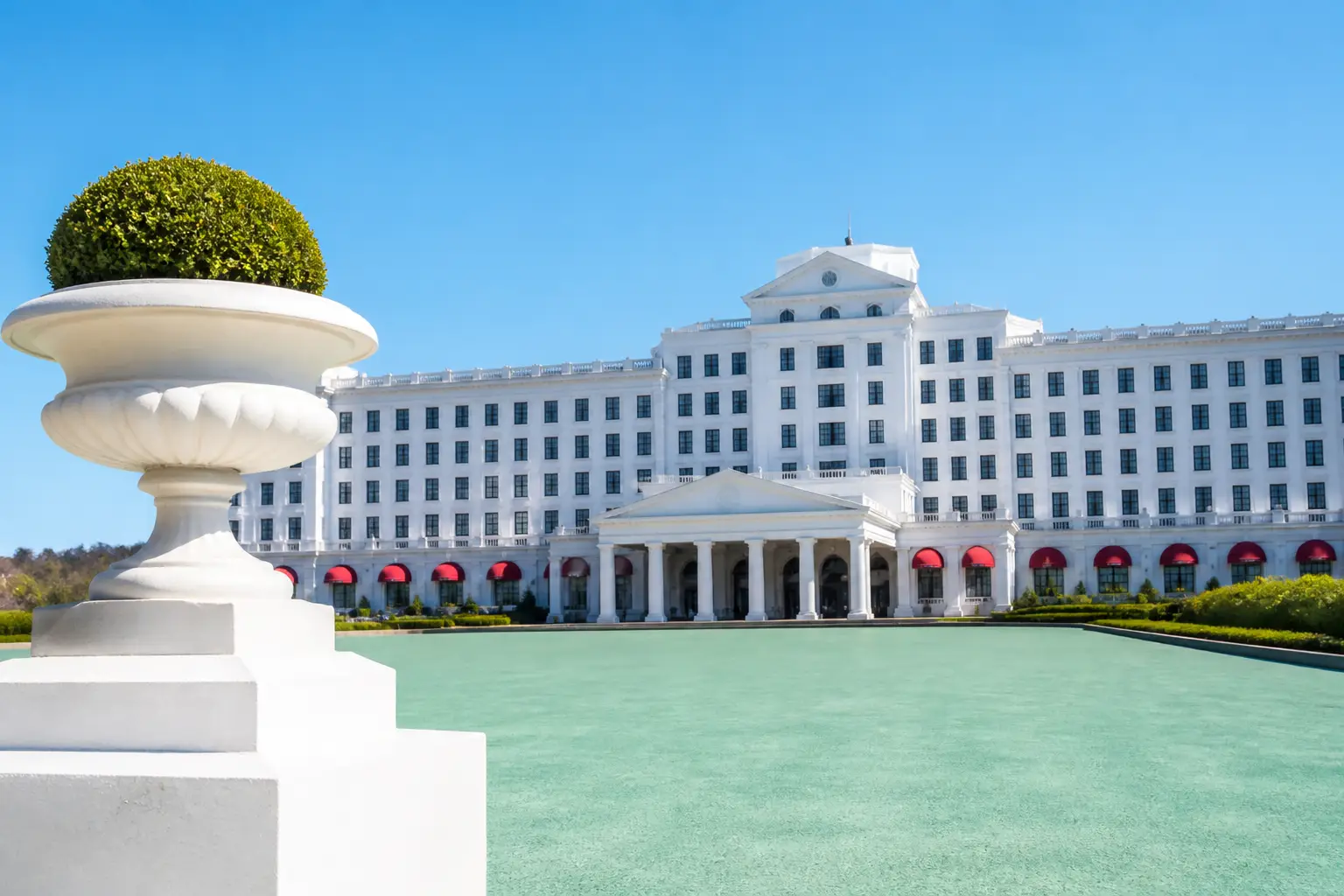 AI-GENERATED
Regulators in West Virginia allow Greenbrier's casino to stay open while a $500 million refinancing deal and ownership change are reviewed.
The historic Greenbrier Resort in West Virginia has secured permission to keep its casino doors open. This development provides much-needed relief for employees who faced the threat of temporary layoffs due to regulatory hurdles. The West Virginia Lottery Commission informed the resort's legal team that gaming operations can legally continue while a major change in ownership structure undergoes a formal review. However, this is conditional on the company taking immediate steps to shield incoming board members from day-to-day operations.
The situation reached a boiling point as a $500 million refinancing deal hung in the balance. Without the regulator's sign-off, the transaction with New York-based private credit firm Kennedy Lewis Investment Management was at risk of collapsing. Attorneys for the Greenbrier had even suggested in federal court filings that the resort might choose to close the casino rather than let regulatory delays derail the crucial refinancing. Such a closure would have impacted approximately 90 jobs and significantly reduced state tax revenue.
Numbers and facts
The scale of the financial pressure is evident in the current filings. The refinancing is intended to pay down roughly $300 million in first-lien debt tied to the property. According to legal counsel, every day of delay adds about $145,000 in interest charges. In the previous year, the resort reported nearly $15 million in revenue and approximately $6.9 million in net income. Despite these operational gains, consultants noted negative working capital and rising liabilities.
License renewal issues are not new for the property. In July 2026, the casino narrowly escaped a shutdown after missing a March 20 deadline for financial audit submissions. A last-minute emergency meeting was required to resolve the filing issues. Kenneth Greear, Chairman of the Lottery Commission, emphasized at the time the importance of reaching a decision that would not harm the local community.
"I’m glad that we’ve come to a good decision and move forward with this and have no impact on the people of West Virginia that are familiar and take part in the Greenbrier’s activity." - Kenneth Greear, Chairman of the West Virginia Lottery Commission
Background
The conflict surrounding the Greenbrier is as much political as it is financial. Owned by the family of Governor Jim Justice, the resort's regulatory oversight is a high-stakes matter. The Lottery Commission has now placed the casino on a financial watch list, requiring quarterly reporting for the new fiscal year. David R. Bradley, Acting Director of the West Virginia Lottery, rejected calls for an emergency meeting but provided a legal pathway to avoid operational disruption.
The interim agreement ensures that while Kennedy Lewis provides the necessary capital, they will not exercise direct control over gaming activities until the full background checks are completed. This is a standard regulatory practice designed to ensure that only vetted individuals maintain control over gaming licenses.
Why it matters for German players
While German players might only visit the Greenbrier during a trip to the United States, this case highlights the critical importance of strict financial oversight in the gambling industry. In Germany, the State Treaty on Gambling (GlüStV 2021) regulates the market with high precision. Players seeking a secure experience should only use platforms listed on the white list of the Gemeinsame Glücksspielbehörde der Länder (GGL). These operators, much like the Greenbrier, must prove their financial solvency to maintain their licenses.
German players benefit from protective measures such as the 1,000 Euro monthly deposit limit managed via the LUGAS system and the 1 Euro per spin limit on virtual slots. While US casinos often deal with massive corporate debt restructurings, the GGL ensures that any financial instability in a German-licensed operator leads to immediate scrutiny to protect player funds. Playing at offshore casinos, such as those licensed in Curacao, does not offer these safeguards.
What it means for GGL-licensed casinos
The strict requirements imposed by the West Virginia Lottery mirror the transparency obligations for German license holders. In Germany, the integrity of owners is a central licensing criterion. If a German operator were to undergo a 500 million Euro refinancing, the GGL would require detailed documentation and disclosure. The Greenbrier case demonstrates a global trend where regulators look beyond the games themselves to scrutinize the underlying economic health of the business. For German casinos, this means that flawless accounting and compliance with all reporting duties via LUGAS and Oasis are essential for survival.
Frequently asked questions
Why was the Greenbrier casino facing closure?
The casino faced a potential temporary shutdown because a massive $500 million refinancing and ownership change had not yet been fully reviewed by gaming regulators. Without this approval, the license could have been suspended during the review process.
What are the resort's current financial challenges?
The resort carries approximately $300 million in first-lien debt and faces negative working capital. Delays in refinancing are costing the company an estimated $145,000 per day in additional interest charges.
How was the shutdown avoided?
The West Virginia Lottery allowed operations to continue on the condition that new board members are insulated from day-to-day gaming decisions. Additionally, the resort must now submit quarterly financial reports to demonstrate stability.
What happens to the casino employees?
The regulator's decision secures the jobs of about 90 casino workers for the time being. Previously, lawyers warned these positions would have to be terminated if the casino were forced to close during the ownership review.
Is playing at a US casino safe for Germans?
US-licensed casinos like the Greenbrier are strictly regulated by their respective states. However, for residents in Germany, it is only legal and safe to play at operators licensed by the GGL, as only they guarantee compliance with German player protection laws.
Share
About the author

Lisa Lustich
Editor-in-chief & casino tester
Lisa Lustich has been testing German-language online casinos since 1997 and runs the Lustich.de newsroom. More than 400 published reviews, certified player-protection advisor (BZgA training, 2019).
All articles by Lisa Lustich →Sources & further reading
- Joint Gambling Authority of the German Federal States (GGL): gluecksspiel-behoerde.de
- Whitelist of permitted online operators: GGL-Whitelist
- BZgA problem-gambling helpline: 0800 1 372 700 (free, anonymous, 24/7)
- Editorial methodology: Editorial guidelines Lustich.de
 United States
Gambling can be addictive. Please play responsibly. Help and counselling at 0800 1 372 700 (BZgA, free & anonymous).
Read this article in 24 languages
Related topics
Further Reading
 AI-GENERATED
How Gambling Licensing Frameworks Shape National Economies and Player Safety
A new analysis explores how licensing structures impact national revenue and investment. South Africa saw $89 billion wagered in the 2024-25 financial year.
 AI-GENERATED
Million-Euro Dispute: Curaçao and Random Consulting Clash Over Consultancy Fees
New financial data contradicts claims that Curaçao paid over €4 million annually to Random Consulting. Records show a total of just €3.4 million was paid between 2022 and 2025.
 AI-GENERATED
Ukraine Launches SOMS: Real-Time Monitoring Revolutionizes Gambling Market
With the new SOMS system, Ukraine can monitor up to 10,000 transactions per second, setting new standards in digital gambling regulation.