
UK Gambling Advertising: Government Rejects Sports Sponsorship Ban
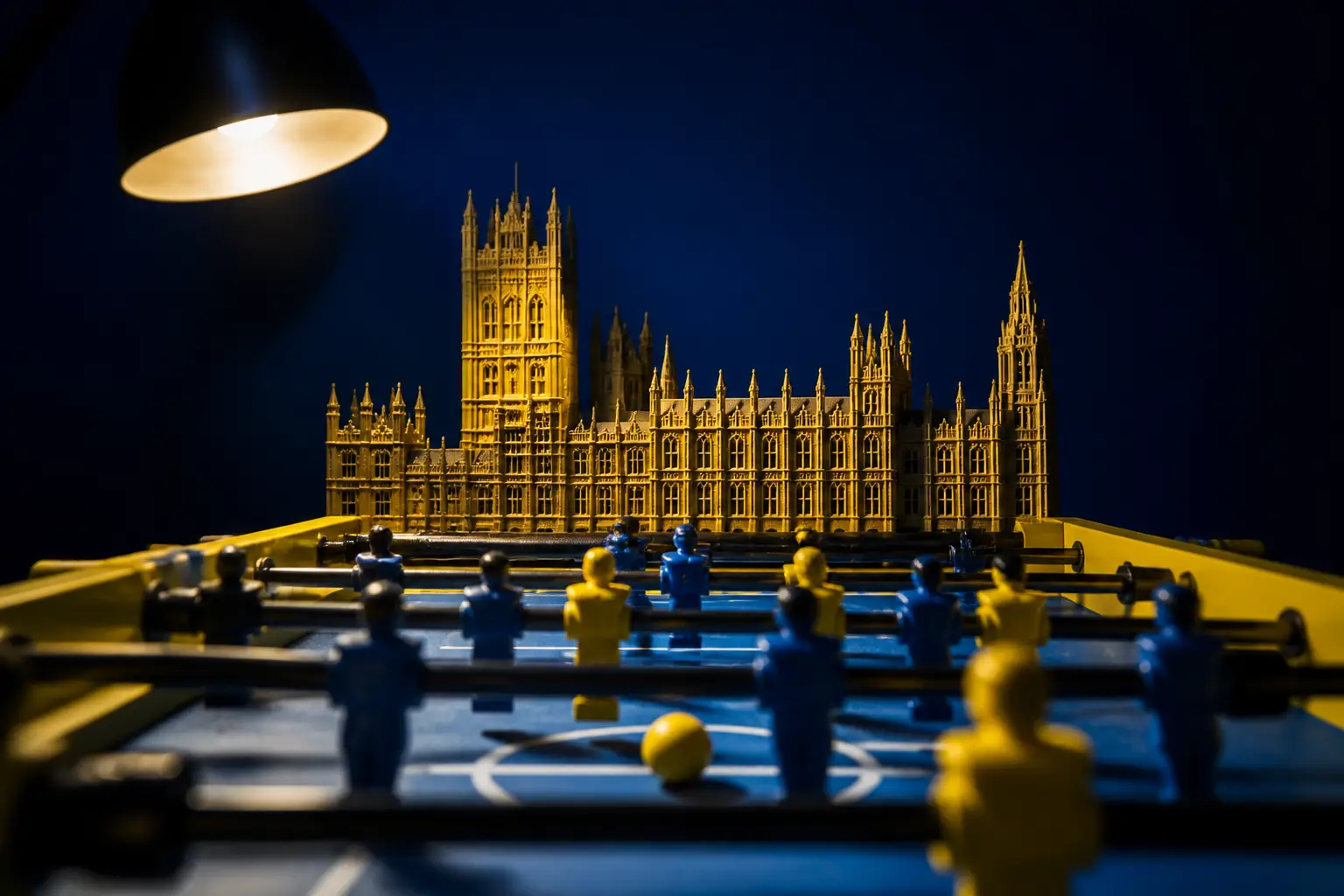
Lord Foster of Bath again calls for stricter rules on gambling advertising in sports and the fight against illegal data use. Despite efforts, his amendment in the House of Lords was rejected on July 15.
A renewed push for reform of UK gambling laws has failed in the House of Lords. Lord Foster of Bath, a long-standing critic of gambling advertising, had introduced two amendments on July 15 as part of the Sporting Events Bill. These aimed to ban gambling advertising in sports venues and prevent the use of data by unlicensed betting operators. However, the government pushed back.
The debate highlights ongoing tension between reform proponents and current government policy in the UK. Despite some common ground in the fight against the black market, views on regulating advertising and sponsorship at sporting events remain divided.
Numbers and facts
Lord Foster emphasized the enormous size of the gambling market, particularly at global sporting events. He cited the figure of half a trillion US dollars, which is spent on gambling at the FIFA World Cup alone. This amount illustrates the immense financial volume transacted in the international sports betting sector. The Liberal Democrats, led by Foster, have long attempted to push through legislative changes to curb gambling advertising and sponsorship in sports. Last year, Lib Dem MP Max Wilkinson failed in a similar attempt when he tried to amend the Football Governance Bill.
“The Minister is rightly desperately keen to do something about illegal gambling. I want to do so too, but I also want to do something about the harm that gambling in this country causes. The solution is very simple, and that is what my amendment effectively provides. It says that we should make it illegal for anybody to use the data from companies if they do not have a licence; it is a very simple solution that would make it much easier to bring prosecutions against people who do not have one.” - Lord Foster of Bath, Liberal Democrat Peer
Baroness Twycross, the Gambling Minister for the Department for Culture, Media and Sport (DCMS) and Chair of the newly established Illegal Gambling Taskforce, asked Lord Foster to withdraw his amendment. While she expressed readiness to combat illegal gambling, she saw no immediate need for intervention regarding data usage by unlicensed operators. The government maintains the 2005 Gambling Act as the primary legislation and is implementing the recommendations of the 2023 Gambling Act review White Paper.
Background
The British government remains reluctant to intervene in commercial sponsorship and advertising agreements. The debate in the House of Lords underscores the ongoing political tensions in the UK regarding gambling regulation. While the government primarily aims to combat illegal gambling, reform proponents advocate for a more comprehensive approach that also considers the societal impact of legal gambling advertising. The Illegal Gambling Taskforce, led by Baroness Twycross, aims to ban unlicensed gambling sponsorship in sports. This step indicates that the government also recognizes gaps in current regulation, but only for illegal providers. Future discussions could gain new momentum if Andy Burnham, potentially the next Prime Minister, shows more sympathy for stricter gambling reforms.
Why it matters for German players
For German players, the British debate provides an interesting comparison, as gambling advertising and player protection are also major issues here. With the State Treaty on Gambling 2021 (GlüStV 2021), strict rules were introduced in Germany. Anyone wishing to play online legally in Germany must adhere to the whitelist of the Joint Gambling Authority of the Federal States (GGL). This list includes all licensed providers who comply with the regulations applicable here. These include a betting limit of 1 Euro per spin on slot machines and a monthly deposit limit of 1,000 Euro, which is controlled via the central monitoring system LUGAS. Players who consciously choose these regulated offers enjoy significantly higher protection than with unlicensed providers. The British discussion shows how difficult it is, even in established gambling markets, to balance player protection and commercial interests.
What it means for GGL-licensed casinos
GGL-licensed casinos in Germany must adhere to significantly more restrictive advertising guidelines than is the case in the United Kingdom. Aggressive sports sponsorships, as discussed in the UK, are not conceivable in this form in Germany. The GGL closely monitors compliance with the rules. Advertising must be clearly identifiable as gambling advertising, must not be directed at minors, and must not encourage excessive gambling. The German regulations were intended from the outset to create a regulated market that prioritizes player protection. This is a fundamental difference from the British approach, where regulation is often only adapted under political pressure.
Sources & further reading
- Joint Gambling Authority of the German Federal States (GGL): gluecksspiel-behoerde.de
- Whitelist of permitted online operators: GGL-Whitelist
- BZgA problem-gambling helpline: 0800 1 372 700 (free, anonymous, 24/7)
- Editorial methodology: Editorial guidelines Lustich.de
Gambling can be addictive. Please play responsibly. Help and counselling at 0800 1 372 700 (BZgA, free & anonymous).