
Council of Europe criticizes FIFA over betting partners and urges fraud prevention
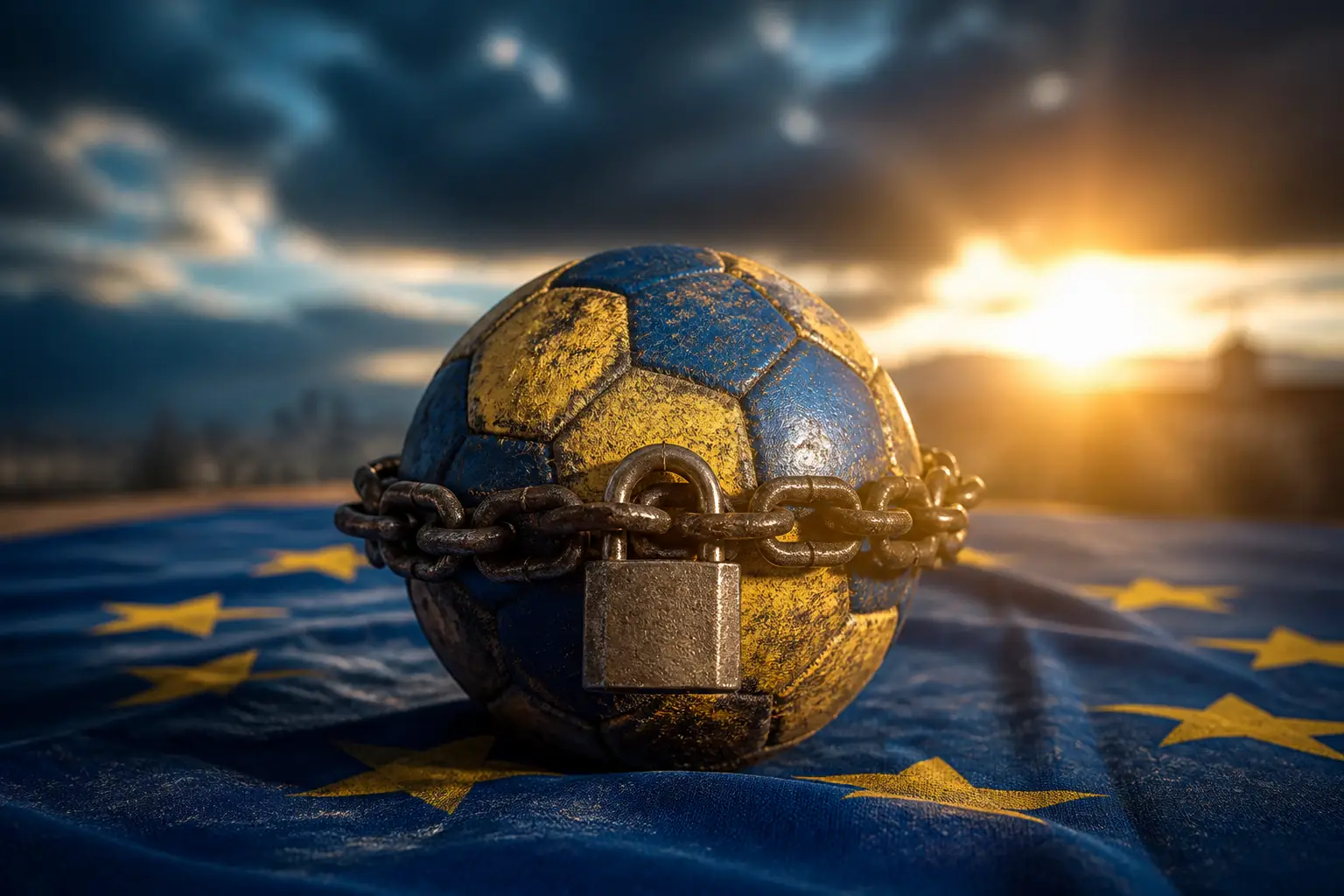
The Council of Europe sharply criticizes FIFA for its partnership with prediction market platforms, warning that these deals could jeopardize the World Cup's integrity. Expanding bets to individual game actions especially opens the door to fraud, according to the Council.
The Council of Europe has strongly attacked FIFA over its collaboration with prediction market platforms. These partnerships would jeopardize the integrity framework of the Football World Cup and open the door to fraudsters. In an open letter published on July 19, 2026, coinciding with the World Cup final, the Council of Europe urged FIFA to strengthen the tournament's integrity and develop new safeguards before the 2030 event.
The issue of integrity in sports betting is particularly sensitive in the context of major sporting events. Regulatory authorities across Europe are increasingly warning against illegal gambling, which thrives on such occasions. This focus on black markets reflects a shift in thinking: player protection is increasingly seen as inseparable from channeling players into the regulated market.
Numbers and facts
Alain Berset, Secretary General of the Council of Europe, emphatically warned that FIFA must protect football from a crisis centered on power and money. His criticism directly targeted the expansion of betting activities.
“The FIFA World Cup 2026 has raised question after question. The celebration will end tonight. The questions will not. Betting has moved from the result of a match to moments a single player can produce without changing the score. A bet is won by making others lose. It is an open door to fraud. And this World Cup has opened the door wider.” - Alain Berset, Secretary General of the Council of Europe
The criticism arose after FIFA entered the prediction market sector with a 'Predictstreet' deal. Authorities are now concerned about how live and player-linked trades will be supervised, and how information sharing and alerts on suspicious bets will work in practice. This aligns with warnings from regulatory bodies like the French l’Autorité Nationale des Jeux (ANJ), which explicitly caution against prediction markets, illegal affiliates, and influencers. The German GGL has a clear negative stance towards such practices.
The US betting market is also plagued by similar issues. Senator Marsha Blackburn, Chair of the Senate Commerce Subcommittee on Consumer Protection, Technology, and Data Privacy, convened a hearing titled “No Sure Bets: Protecting Sports Integrity in America.” At the previous hearing in 2024, Blackburn cited studies showing that about 10 percent of organized crime revenue from foreign enterprises comes from illegal sports betting. According to the United Nations Office on Drugs and Crime (UNODC), at least $140 billion is laundered annually through illegal and unregulated sports betting operators.
Background
Historically, public debate focused on licensed operators because that was where regulators had visibility. Data existed, interventions could be measured, and compliance obligations could be enforced. Today, however, regulators are paying increasing attention to what Ismail Vali, President of Gaming Compliance International (GCI), calls the “systemic” threat posed by unlicensed operators. He emphasizes that the regulated sector represents the visible risk, while illegal gambling is increasingly the structural risk to marketplace outcomes.
Player protection remains critically important. That is the unequivocal statement. What has changed is the industry's understanding of where many of the risks now exist, according to Vali. Self-exclusion systems, affordability checks, responsible gambling tools, and dispute resolution mechanisms – all rely on one fundamental condition: consumers must actually use regulated operators. A self-exclusion scheme only protects a consumer if that consumer does not immediately migrate to an illegal operator. This understanding is now widespread. The Dutch Kansspelautoriteit (KSA) sees the fight against the illegal market as a necessary consequence of strengthened player protection in the regulated sector. They describe the legal and illegal markets as communicating vessels. If player protection is strengthened, the KSA states, players may migrate from legal to illegal offerings. To contain this, it is necessary to combat the illegal market even harder and more effectively.
Why it matters for German players
For German players, this development means that the focus on the regulated market becomes even more crucial. Under the Glücksspielstaatsvertrag 2021 (GlüStV 2021), online gambling in Germany is largely regulated. The Gemeinsame Glücksspielbehörde der Länder (GGL) licenses and supervises online casinos and sports betting providers in Germany. Players who stick to GGL-licensed operators benefit from a high level of player protection, including a stake limit of 1 Euro per spin on slot machines and a monthly deposit limit of 1,000 Euro across all providers. The central self-exclusion system LUGAS allows players to exclude themselves from gambling.
Illegal providers do not adhere to these rules and often offer supposedly more attractive bets and bonuses, which however provide no protective mechanisms. Like the types of bets on individual game events criticized by the Council of Europe, many offerings on the black market are not compliant with German regulations. This carries a higher risk not only for gambling addiction but also for fraud and money laundering. Players who play with unregulated providers have no legal recourse in case of disputes or fraud. The GGL is actively engaged in combating illegal offerings to channel players into the protected legal market.
What it means for GGL-licensed casinos
For operators of GGL-licensed casinos, this international development confirms the strict German regulatory approach. German licenses signal a high degree of integrity and player protection. The GGL places great emphasis on compliance with regulations, not only in the area of problem gambling prevention but also in combating fraud and money laundering. Prediction markets or micro-event bets, as allowed by FIFA and criticized by the Council of Europe, are not permitted or are severely restricted in Germany. This comprehensively protects players from such risks. This strict stance strengthens trust in the legal gambling market in Germany and makes it a safe haven for players who wish to gamble responsibly.
Sources & further reading
- Joint Gambling Authority of the German Federal States (GGL): gluecksspiel-behoerde.de
- Whitelist of permitted online operators: GGL-Whitelist
- BZgA problem-gambling helpline: 0800 1 372 700 (free, anonymous, 24/7)
- Editorial methodology: Editorial guidelines Lustich.de
Gambling can be addictive. Please play responsibly. Help and counselling at 0800 1 372 700 (BZgA, free & anonymous).