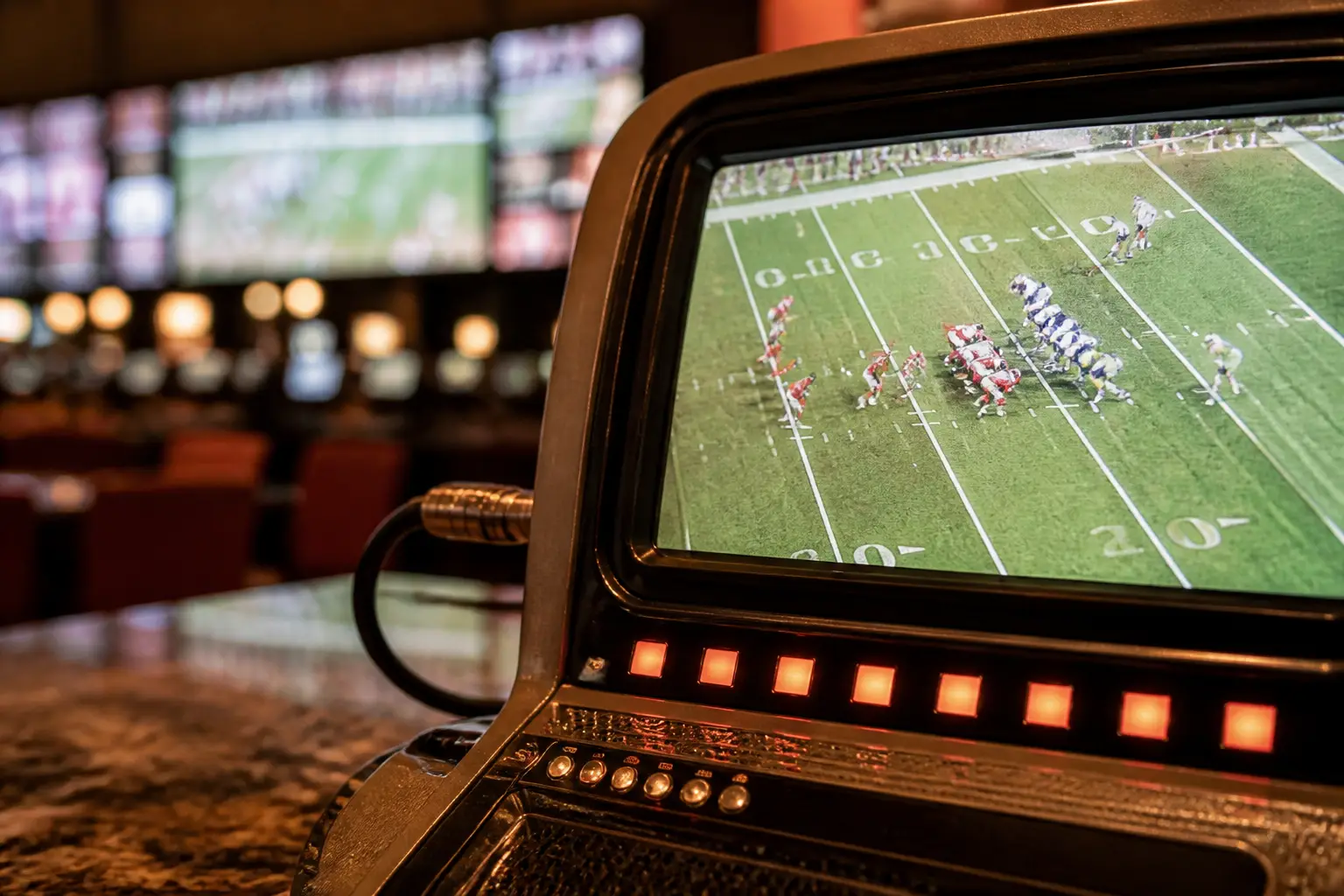
CME CEO Warns: Some Sports Prediction Markets Are Pure Gambling

CME Group CEO Terry Duffy differentiates between financial contracts and sportsbook-style products, warning that small parlays in prediction markets are essentially gambling.
A significant debate is unfolding in the world of financial derivatives as Terry Duffy, the CEO of CME Group, has taken a firm stand against the blurring lines between financial markets and sports betting. During a recent earnings call, Duffy expressed serious concerns that some prediction markets are masquerading as regulated financial exchanges while offering products that are indistinguishable from gambling. He specifically pointed to small parlays and certain sportsbook-style contracts as items that do not belong in a federally regulated financial environment.
This stance is particularly noteworthy because CME Group is a massive player in the global derivatives space and has recently expanded its own lineup of sports-related event contracts. Just one day before these comments, CME certified additional swaps for professional tennis, golf tournament positions, and college football outcomes. However, Duffy is careful to draw a line between institutional-grade financial instruments and speculative betting products that he believes are susceptible to manipulation. The distinction, according to CME leadership, is not about whether a product is linked to sports, but rather how it is structured and regulated.
Numbers and facts
CME Group is moving cautiously, intentionally limiting its sports event contracts to ensure they meet the rigorous requirements of its regulator, the Commodity Futures Trading Commission (CFTC). In contrast, the joint venture FanDuel Predicts, a partnership between CME and Flutter Entertainment, is rapidly expanding. This venture recently partnered with Crypto.com's Nadex to broaden its catalog of sports and entertainment contracts. While CME describes its own lineup as narrow, the filing for its new contracts explicitly states they are swaps under the Commodity Exchange Act (CEA). These contracts are claimed to avoid being classified as gaming because the underlying events possess significant financial and economic consequences.
Former CFTC Chair Gary Gensler, who led the commission from 2009 to 2014, has joined the opposition against the expansion of these markets. Gensler argued in a recent legal brief that Congress never intended for the CFTC to become a federal sports betting regulator. He noted that if these sports contracts were truly treated as swaps, then almost every tribal or state-level sports bet made in the last decade would technically be illegal under federal law. This legal tension puts operators like Kalshi, which has offered sports event contracts since January, in a precarious position.
"A lot of these prediction markets on sports are gambling, and I think that that is going to find its way to the Supreme Court, and that is not something that we want to be a part of participating in right now." - Terry Duffy, CEO of CME Group
Background
The core of the issue lies in whether a bet on a player's performance or a game's outcome can be redefined as a financial derivative simply because it is traded on an exchange. For companies like Flutter and DraftKings, prediction markets represent a massive opportunity for customer acquisition. Flutter CEO Peter Jackson highlighted the potential of these markets during a May earnings call, noting that they share characteristics with exchange products the company already operates globally, such as the Betfair Exchange.
However, Duffy remains skeptical of the rapid growth in speculative trading, calling it a disaster waiting to happen. The CME Group has even taken legal action against the CFTC over the approval of certain Bitcoin contracts to protect what it considers the integrity of the market. Meanwhile, the CFTC itself is struggling with staffing, currently operating with a sole acting commissioner, Michael Selig, which has drawn criticism from Congress. This regulatory vacuum in the US has allowed some operators to offer what looks like sports betting in states where it remains illegal, such as California and Texas, by framing the activity as financial trading.
Why it matters for German players
For German residents, this American legal battle highlights the importance of the strict regulations found in the German Interstate Treaty on Gambling 2021 (GlüStV 2021). Germany does not allow the kind of regulatory arbitrage seen in the US. Any product that functions as a bet on a sporting event is treated as a sports bet, regardless of whether it is hosted on a financial platform or a traditional sportsbook. This ensures that German consumers are protected by the central LUGAS monitoring system, which enforces a mandatory 1,000 Euro monthly deposit limit across all licensed platforms.
Furthermore, the 1 Euro stake limit for virtual slots and the mandatory cooling-off periods provide a level of safety that is currently missing in the high-speed world of unregulated US prediction markets. German players should be wary of international financial platforms offering sports-based trading, as these often lack the GGL license required to legally operate in Germany. Without the GGL seal of approval, players have no legal recourse in case of disputes and are not protected by German player safety standards.
What it means for GGL-licensed casinos
Licensed operators in Germany benefit from a stable legal framework that clearly separates gambling from finance. While US-based exchanges are fighting over jurisdiction and definitions, GGL-licensed casinos and sportsbooks can operate with the certainty that they are compliant with national law. The integrity of sports competitions is a high priority for the GGL, and the strict reporting requirements for licensed operators help prevent the very manipulation that Terry Duffy is worried about in the US. By adhering to the GGL whitelist, German operators provide a transparent and secure environment that contrasts sharply with the current "regulatory morass" described by US industry experts.
"Our product set is much more narrow than some of what you might see on some of these other platforms, and that is intentional because we want to be very careful with what we are putting out for trade to make sure that it meets all the requirements that we see from our regulator." - Lynne Fitzpatrick, President and CFO of CME Group
Sources & further reading
- Joint Gambling Authority of the German Federal States (GGL): gluecksspiel-behoerde.de
- Whitelist of permitted online operators: GGL-Whitelist
- BZgA problem-gambling helpline: 0800 1 372 700 (free, anonymous, 24/7)
- Editorial methodology: Editorial guidelines Lustich.de
Gambling can be addictive. Please play responsibly. Help and counselling at 0800 1 372 700 (BZgA, free & anonymous).